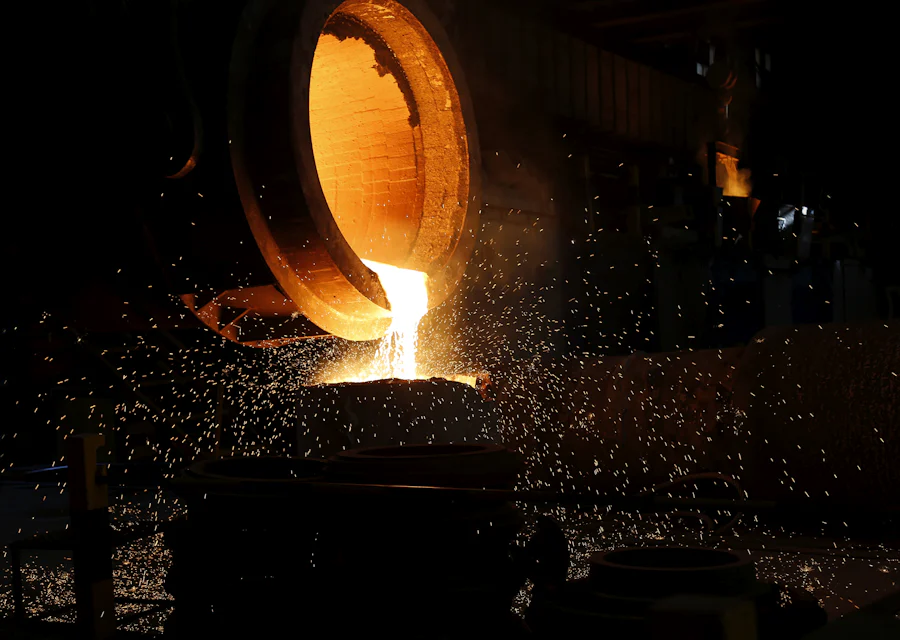
Foundries cut rejections by recording every defect against its pattern, heat and shift, then fixing the few causes that repeat most. They know the true cost per casting by adding up metal, melting, moulding, finishing and overheads, and then dividing by good castings only, not by everything poured. Both depend on clean daily data from the shop floor.
Why casting rejection analysis decides foundry profit
In the casting industry, a rejected casting is not just a lost piece. By the time it is found, you have already paid for the metal, the melting power, the sand, the core, the moulding labour and often the fettling and machining. That is why casting rejection analysis matters more than almost any other report in a foundry.
Most foundries count rejections. Fewer analyse them. A register that says "rejection 120 pieces today" does not tell you which pattern, which heat, which defect or which shift caused the loss. Casting industry software helps by capturing these details at the point of inspection, so patterns of failure become visible.
Common casting defects, explained simply
Defect names vary between foundries, but most rejections fall into a few familiar families. Here is a general, plain-language view. Your metallurgist or quality head will know the exact causes for your process and alloy.
- Blowholes: smooth, rounded cavities caused by gas trapped in the metal. Moisture in sand or cores and poor venting are frequent suspects.
- Shrinkage: cavities or porosity that form as metal contracts while solidifying, often in thick sections that are not fed properly by risers.
- Sand inclusion: sand from the mould or core trapped in the casting, often linked to weak mould areas, loose sand or erosion during pouring.
- Cold shut: two streams of metal meet but do not fuse properly, leaving a line or seam. Low pouring temperature or slow pouring are common causes.
- Misrun: the metal solidifies before filling the mould completely, leaving the casting incomplete, often in thin sections.
- Others: cracks, mismatch between mould halves, slag inclusion, dimensional problems and surface defects.
The point is not to diagnose every defect in software. The point is to record each rejection with a standard defect code, so the right people can see which ones repeat, and where.
Analysing rejections by pattern, heat and shift
Once defects are coded and linked to the casting record, a few simple views tell you most of what you need to know.
| View | Question it answers | Typical lead to follow |
|---|---|---|
| By pattern | Which castings reject the most? | Gating, risering or pattern condition |
| By defect | Which defect costs the most? | Sand, core, pouring or metal practice |
| By heat | Did one melt cause many rejections? | Chemistry, temperature or charge mix |
| By shift or moulding line | Is the problem linked to a team or machine? | Training, sand control or equipment |
| By customer | Which customers return the most castings? | Specification, inspection or handling |
A simple habit works well: every week, list the top few pattern and defect combinations by rejected weight, assign each one to an owner, and check the trend the following week. Casting industry software makes this list ready every morning instead of once a month.
Internal rejection vs customer rejection
Keep two separate counts. Internal rejections are found in your fettling or inspection area. Customer rejections come back after dispatch, sometimes after machining, and cost much more. Record customer returns against the original dispatch and heat, so they join the same analysis.
Yield: the hidden cost driver
Yield compares the weight of good castings with the weight of metal poured. Runners, risers, gates and rejected castings all go back into the furnace as returns, so it can feel as if nothing is lost. But every kilogram of return has to be melted again, using power, labour and furnace time, and some metal is lost in every melt.
That is why low yield quietly raises cost per casting even when the metal is "recycled". Tracking poured weight and good casting weight per pattern shows which patterns waste the most metal and are worth a method change. Our foundry ERP software guide explains how heat-wise records make these figures easy to capture.
Building the true cost per kg and per casting
Many foundries quote on a rate per kg based on experience. That works until material prices, power tariffs or rejection levels change. A proper cost build-up shows which part of the cost is moving. The table lists the usual cost heads. The actual figures come from your own heat records, power readings, payroll and expenses.
| Cost head | What it includes | Where the data comes from |
|---|---|---|
| Metal charge | Scrap, pig iron, returns, ferro-alloys and inoculants | Heat-wise charge mix and purchase rates |
| Melting loss | Metal lost during melting | Charge weight vs tap weight per heat |
| Melting power or fuel | Electricity or fuel used per heat | Meter readings or fuel issues |
| Moulding and cores | Sand, binders, core materials and moulding labour | Consumption records and attendance |
| Fettling and finishing | Knockout, shot blasting, grinding and fettling labour | Shop records and job-work bills |
| Outside processes | Heat treatment, machining or painting done outside | Job-work challans and bills |
| Rejection cost | Full cost of rejected castings spread over good ones | Rejection records by pattern |
| Overheads | Supervision, maintenance, pattern upkeep, admin | Monthly expenses allocated by weight or hours |
Add these up for a period and divide by the weight of good castings to get the true cost per kg. Multiply by the good weight of a particular casting, and add any part-specific costs such as cores or machining, to get the cost per casting. Comparing this with your selling rate, pattern by pattern, often shows that a few castings carry most of the profit and a few quietly lose money.
Using cost data to quote and to decide
Once cost per casting is known pattern by pattern, it changes how a foundry works. New enquiries can be quoted from real yield and rejection data for similar castings, instead of a general rate per kg. Existing customers can be reviewed honestly: a casting that looked profitable on weight may turn out to lose money once its high rejection and low yield are counted.
Cost data also helps prioritise improvement work. Fixing a defect on a high-volume pattern with poor yield usually saves far more than fixing a rare defect on a small casting. When metal or power prices move, the cost build-up shows exactly how much each casting is affected, which gives you facts for rate revision talks with customers.
What casting industry software should record
- Heat-wise charge mix, tap weight and melting loss.
- Boxes poured and castings made per heat and pattern.
- Rejections with defect code, pattern, heat, shift and stage found.
- Customer returns linked to the original dispatch and heat.
- Poured weight and good weight per pattern for yield.
- Power, consumables, job-work and labour booked to the period.
How Pinakexa helps foundries
Pinakexa is an industry-ready cloud ERP that we configure for grey iron, SG iron, steel and non-ferrous foundries. We set up heat sheets, defect codes, pattern masters and cost heads to match your shop, import masters from Excel and train furnace, moulding and quality staff to enter data from a phone. Rejection and cost reports then come from the same daily records.
See what we configure on our foundry ERP page, or book a free demo and bring a week of your heat and rejection records to discuss.